
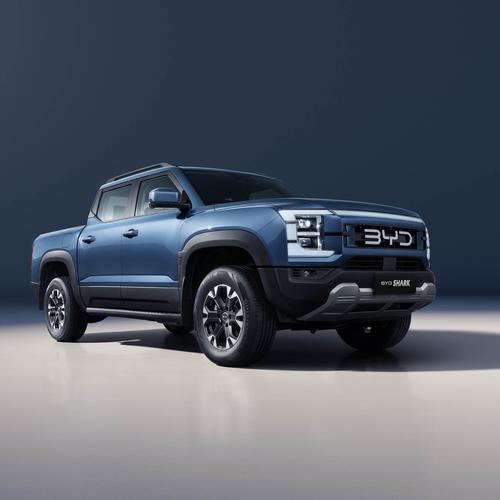
The BYD SHARK DMO is heading to Europe with 436 PS, four-wheel drive and a rather unusual pair of fuel consumption figures. BYD quotes 3.5 litres per 100 km under the weighted WLTP test. With the battery depleted, that rises to 9.6 litres.
It’s a substantial difference for the same vehicle.
The explanation lies in how plug-in hybrids are tested. The weighted figure takes electric driving into account, so it rewards a vehicle capable of covering a useful distance without burning petrol. It doesn’t mean the SHARK will average 3.5 litres on every journey.
That depends on how it’s driven.
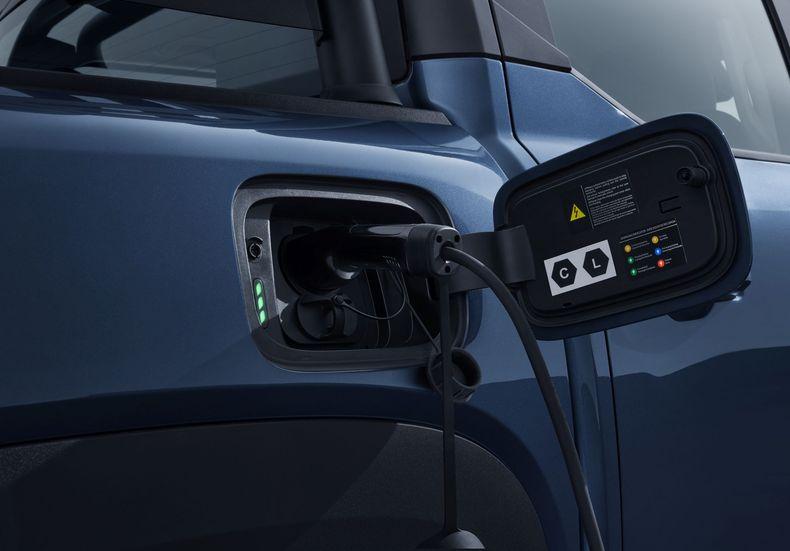
BYD has fitted a 32.2 kWh battery, giving the pick-up an electric range of up to 90 km. Someone driving to work and back, with charging available at home, might complete much of the week without needing the petrol engine for those journeys.
Now consider a driver spending several hours on the motorway.
Once the usable electric charge is depleted, the SHARK continues as a hybrid. Petrol consumption becomes more relevant, particularly on longer trips where there may be little opportunity to recharge.
The SHARK made its European show debut at the Paris Motor Show in October 2026. Underneath its body sits a ladder-frame chassis, although the powertrain is quite different from the diesel engines traditionally associated with pick-ups.
A 1.5-litre turbocharged petrol engine works alongside electric motors at both axles. Total system output reaches 436 PS and 650 Nm, enough for 0–100 km/h in 5.7 seconds.
That’s sports-saloon acceleration in a sizeable utility vehicle.
Whether owners need that performance is another question. The SHARK’s ability to provide electricity to external equipment may be more useful during an ordinary working day.
Its Vehicle-to-Load system delivers up to 6 kW, potentially powering tools or other electrical equipment where a mains connection isn’t available.
Charging isn’t restricted to a domestic socket, either. The battery supports 11 kW AC charging and up to 55 kW DC. BYD quotes 21 minutes for a 30–80% recharge using suitable rapid-charging equipment.
Combined driving range is rated at 675 km.
The SHARK is expected to enter selected European markets before the end of 2026, with wider availability planned for 2027. European prices haven’t been announced.
Until they are, it’s difficult to compare ownership costs with established diesel alternatives. What buyers can already work out is how often they’d charge the battery. That decision will have a considerable influence on which of BYD’s two fuel consumption figures comes closest to their everyday experience.